Pipe failure · Rochester, MI
Burst Pipe Cleanup in Rochester, MI
A pressurized supply pipe can move hundreds of gallons an hour into walls, ceilings and the floor below. The extraction crew pulls the water out, and the drying team dries the cavities it ran through.
(888) 612-9219Get the burst pipe water out in Rochester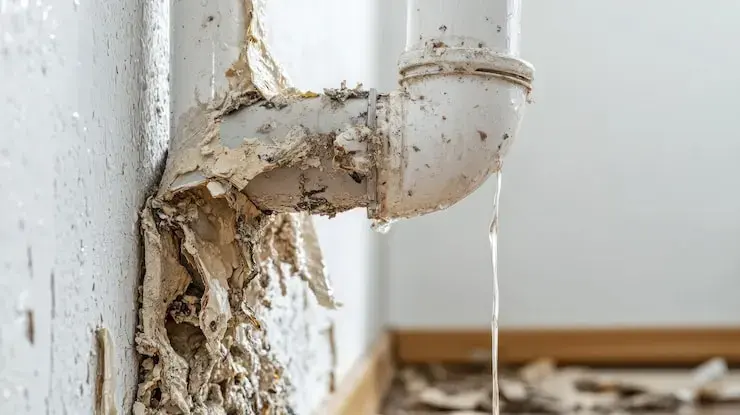
First move
Close the main shutoff
Water category
Usually 1, clean supply
Drying standard
IICRC S500
Hidden water
Found with thermal imaging
Do this first
First moves when you find a burst pipe
- Close the main Shut the main valve, usually by the meter in the basement.
- Open a low faucet Drain the pressure out of the system.
- Cut power to wet rooms Only from a dry panel area.
- Catch ceiling water Put a bucket under drips and stay out from under a sagging ceiling.
- Photograph the pipe Pictures of the break help the plumber and the claim.
Typical cost ranges
What does burst pipe cleanup cost in Rochester, MI?
In Rochester, MI, burst pipe cleanup typically runs $1,200 to $10,000. The drivers are how long the pipe ran, how many rooms and floors it reached, the materials that got wet and how fast drying started.
One wall or room
$1,200 to $3,000
- Extraction
- Cavity drying
- Moisture readings
Two floors affected
$3,000 to $6,500
- Ceiling drainage
- Flood cuts where needed
- Multi-room drying
Long leak, wide spread
$6,500 to $10,000+
- Wide material removal
- Hardwood drying
- Extended monitoring
Every loss is priced on its own facts. Run the water damage cost calculator for a planning range before the walkthrough.
The work, step by step
How a burst pipe is handled in Rochester, MI
- 1
Trace the water
The tech who does the walkthrough maps walls, ceilings and floors with thermal imaging and meters.
- 2
Extract and drain
The extraction crew removes standing water and drains wet ceilings safely.
- 3
Open only what traps water
The mitigation team makes small, controlled openings where readings call for it.
- 4
Dry the cavities
Air movers, LGR dehumidifiers and injection drying run to the goal.
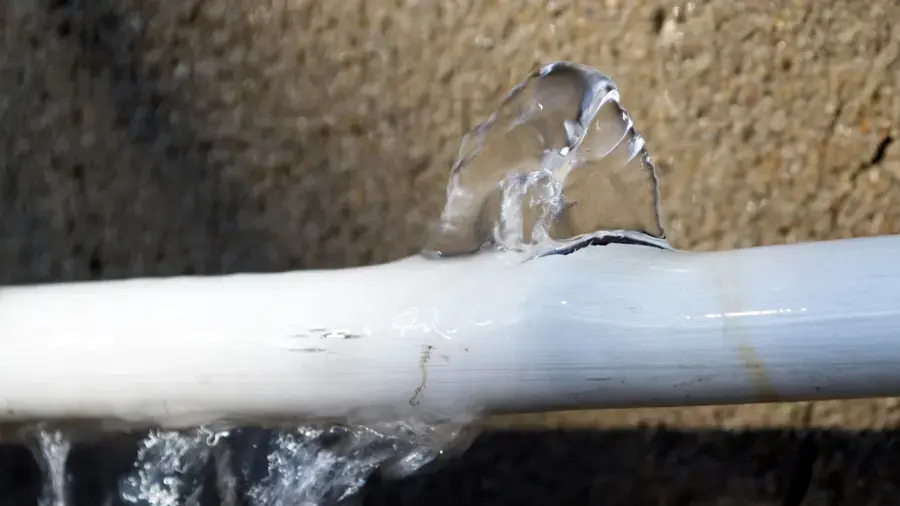
Most burst pipes in Rochester homes are supply lines under constant pressure, so they keep running until someone closes a valve. The water is clean at first, which is good news, because a Category 1 loss caught early can usually be dried in place.
Why pipes burst in Rochester homes
- Polybutylene supply lines in some homes built from 1978 to 1995
- Galvanized steel in older downtown and North Hill houses that corrodes from the inside
- Failed fittings and push connectors under sinks and behind appliances
- Pipes in exterior walls and garages that freeze and split, covered on the frozen pipe page
How the cleanup works
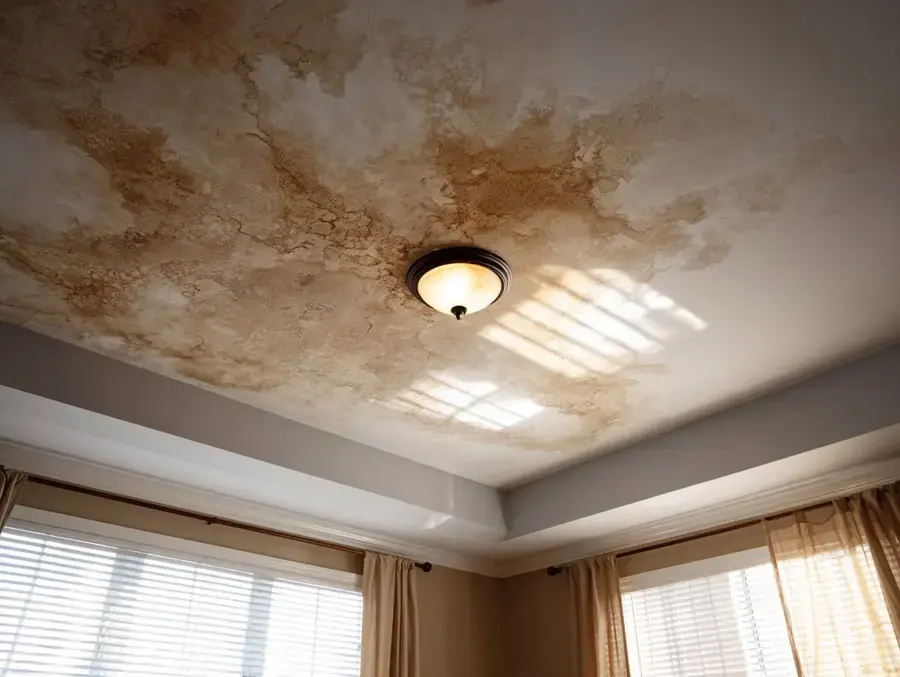
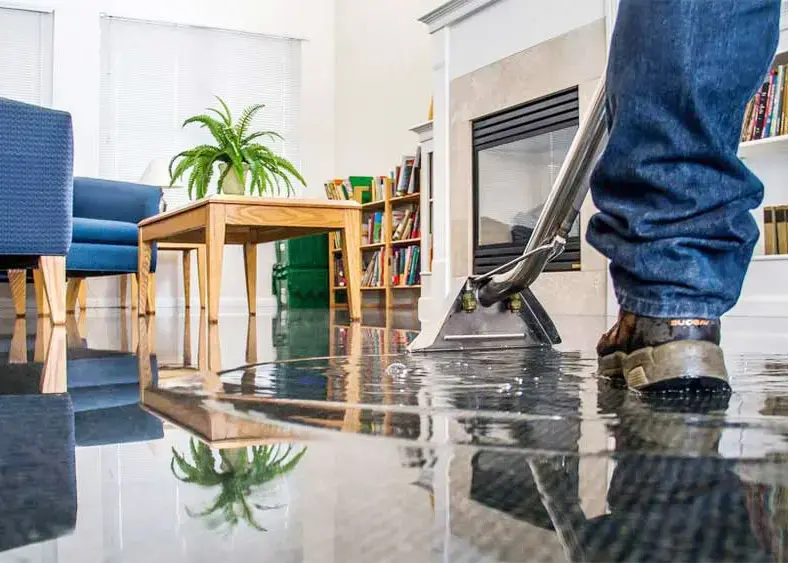
Once the main is closed, the tech who does the walkthrough traces where the water went with a thermal camera and pinless meters, because water runs along framing and across ceilings long before it shows. The extraction crew removes standing water from floors and carpet. Where a ceiling holds water, the crew drains it through a small hole before it sags.
The mitigation team opens only what traps water: a flood cut, a few drill holes in a wall cavity or a strip of ceiling. The drying team then sets air movers and LGR dehumidifiers, and uses injection drying on wall cavities where it helps. Readings are logged daily until every material hits the drying goal.
Trade fact: clean supply water turns into Category 2 if it sits for a couple of days, so the category is judged by how long the water sat as well as where it came from.
After the water is off
A plumber repairs the pipe, often during drying. Know where your main shutoff is before you need it; in most Rochester Hills homes it sits near the meter in the basement. The EPA WaterSense leak page and the Ready.gov flood page cover leak checks and water safety.
Service area
Burst Pipe Cleanup across Rochester and Oakland County
The restoration team covers Rochester and Rochester Hills across ZIP codes 48306, 48307, 48308 and 48309, from downtown Main Street and North Hill to Brooklands, Oakland University and the Oakland Township edge, plus Shelby Township, Auburn Hills, Lake Orion, Troy and Utica.
See every area and ZIP coveredRelated
Related water damage services in Rochester
Questions
Burst Pipe Cleanup questions in Rochester, MI
1How much water does a burst pipe release?
A failed supply pipe can move hundreds of gallons an hour, which is why closing the main shutoff is the first step.
2Can the walls be dried without tearing them out?
Often yes, with a clean-water loss caught early. Small openings and injection drying reach the cavity, and readings confirm when it is dry.
3Is a burst pipe covered by insurance?
A sudden, accidental pipe failure is often covered, while a slow leak over months may not be. Coverage depends on your policy, so it is worth checking with your own insurer.
4What is polybutylene pipe?
A gray plastic supply pipe used in many homes built from 1978 to 1995 that can fail at fittings. A plumber can tell you if your house has it.
5Can hardwood floors be saved?
Sometimes. Hardwood dried quickly with specialty floor mats often recovers. Cupping that does not settle may mean replacement.
6How long does drying take after a burst pipe?
A contained Class 1 or 2 loss usually dries in three to five days. Hardwood and plaster take longer.
24/7 emergency dispatch
Burst Pipe Cleanup in Rochester? Start the dry-out now.
Water that sits keeps spreading into subfloor, drywall and framing. The Rochester restoration crew handles a burst pipe 24/7 across Rochester and Rochester Hills.