Private well systems · Rochester, MI
Well Tank & Softener Leak Cleanup in Rochester, MI
On a private well the pump keeps refilling a leaking pressure tank until the breaker is off. The extraction crew removes the water, and the drying team dries the basement corner where the well gear lives.
(888) 612-9219Get the well tank leak cleaned up in Rochester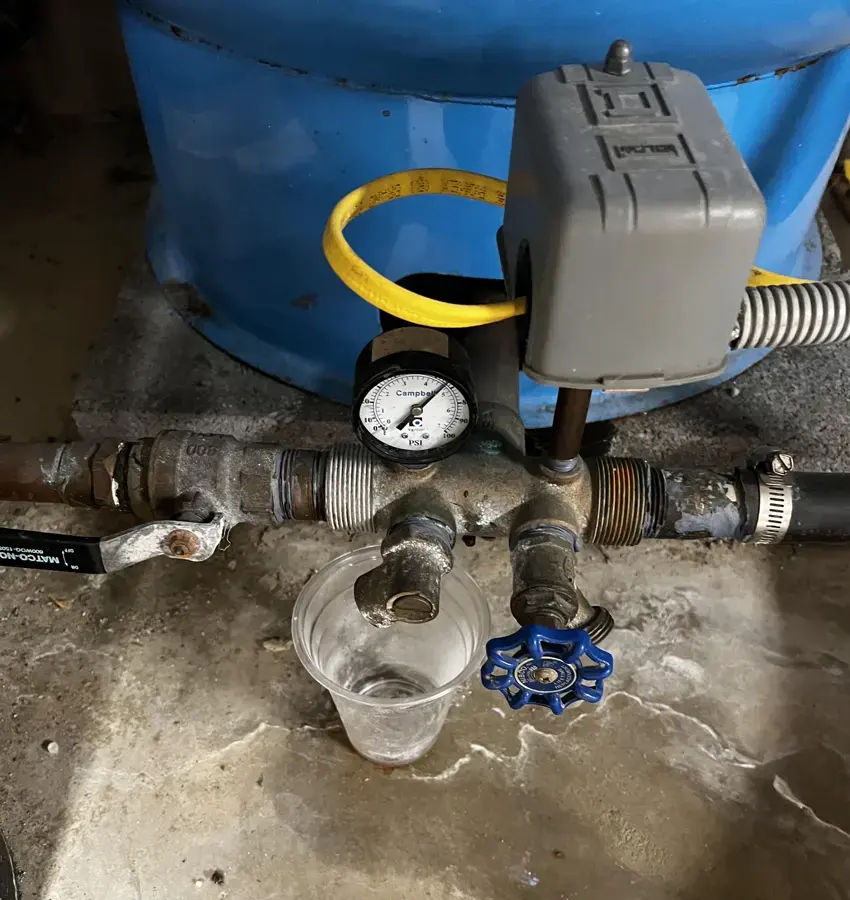
First move
Switch off the well pump breaker
Water category
Usually 1, clean well water
Drying standard
IICRC S500
Where it happens
Oakland Township and north Rochester Hills
Do this first
First moves when you find a well tank or softener leak
- Switch off the well pump Turn off the breaker marked well or pump.
- Close the tank valve If there is a shutoff after the tank, close it.
- Bypass the softener Turn the bypass valve if the softener is leaking.
- Move things off the floor Lift boxes and rugs near the tank.
- Photograph the equipment Include the tank label and the leak point.
Typical cost ranges
What does well tank and softener leak cleanup cost in Rochester, MI?
In Rochester, MI, well tank and softener leak cleanup typically runs $600 to $5,000. The drivers are how long the pump kept feeding the leak, whether water reached finished rooms, the flooring and how fast drying started.
Utility corner only
$600 to $1,500
- Extraction
- Slab drying
- Readings
Into a finished room
$1,500 to $3,500
- Pad removal
- Wall base drying
- Brine rinse
Long run, wide spread
$3,500 to $5,000+
- Flood cuts
- Multi-room drying
- Extended monitoring
Every loss is priced on its own facts. Run the water damage cost calculator for a planning range before the walkthrough.
The work, step by step
How a well tank or softener leak is handled in Rochester, MI
- 1
Stop the pump
The response team confirms the well pump is off and the leak has stopped.
- 2
Extract
The extraction crew removes water from the utility area and nearby rooms.
- 3
Rinse and check
Brine residue is rinsed and meters check the walls and pad.
- 4
Dry to the goal
The drying team runs equipment and logs readings until the basement is dry.
North of Rochester, toward Tienken Road, Adams Road and Oakland Township, many homes draw water from a private well. The well system lives in the basement: a pressure tank, a pressure switch, often a softener and a sediment or iron filter. When any of those leak, the pump keeps running to refill the tank, and the water keeps coming.
What fails in a well system
- Pressure tanks that rust through at the bottom or split a bladder
- Fittings and the tank tee that corrode at the threads
- Softener brine tanks that overflow when a valve sticks
- Filter housings that crack, often after a pressure spike
- A relief valve that opens when the pressure switch fails to shut the pump off
How the cleanup works
With the well pump breaker off, the leak stops. The extraction crew removes standing water from the utility corner and any finished room it reached, and the tech who does the walkthrough meters the base of nearby walls and the carpet next door. Softener brine is salty, so floors and baseboards it touched are rinsed before drying.
The drying team sets air movers and LGR dehumidifiers and logs readings until the slab and walls reach the drying goal. A well contractor or plumber replaces the failed tank or fitting, which can happen during drying once the area is clear.
Trade fact: a well pump that runs nonstop to feed a leak can burn itself out, so switching off the pump breaker protects the pump as well as the basement.
Checks that catch it early
Watch for a pump that cycles on and off rapidly, a waterlogged tank or rust at the tank base. The EPA private wells page and the Michigan EGLE site cover private well care. Tank failures on city water systems are covered on the water heater leak page.
Service area
Well Tank and Softener Leak Cleanup across Rochester and Oakland County
The restoration team covers Rochester and Rochester Hills across ZIP codes 48306, 48307, 48308 and 48309, from downtown Main Street and North Hill to Brooklands, Oakland University and the Oakland Township edge, plus Shelby Township, Auburn Hills, Lake Orion, Troy and Utica.
See every area and ZIP coveredRelated
Related water damage services in Rochester
Questions
Well Tank and Softener Leak Cleanup questions in Rochester, MI
1How long do well pressure tanks last?
Many last 10 to 15 years. Rust at the base or a pump that cycles rapidly are signs of a failing tank.
2Why does the leak keep going?
The well pump refills the tank as pressure drops, so a leak on a well system keeps running until the pump is switched off.
3Is softener water harmful to floors?
Brine is salty and can leave residue on concrete and baseboards, so it is rinsed before drying.
4Is a well tank leak covered by insurance?
Water damage from a sudden failure is often covered, though the tank itself usually is not. Coverage depends on your policy, so it is worth checking with your own insurer.
5Will the water be drinkable after a repair?
A well contractor can advise on disinfecting the system after work on the tank or lines.
6How long does drying take?
Most utility-corner leaks dry in two to four days, longer if water reached finished rooms.
24/7 emergency dispatch
Well Tank and Softener Leak Cleanup in Rochester? Start the dry-out now.
Water that sits keeps spreading into subfloor, drywall and framing. The Rochester restoration crew handles a well tank or softener leak 24/7 across Rochester and Rochester Hills.