Deep freeze · Rochester, MI
Frozen Pipe Cleanup in Rochester, MI
A frozen pipe usually leaks when it thaws, not when it freezes, so the damage often shows up the day after the cold snap. The restoration team extracts the water and dries the wall or ceiling it ran into.
(888) 612-9219Get winter pipe damage handled in Rochester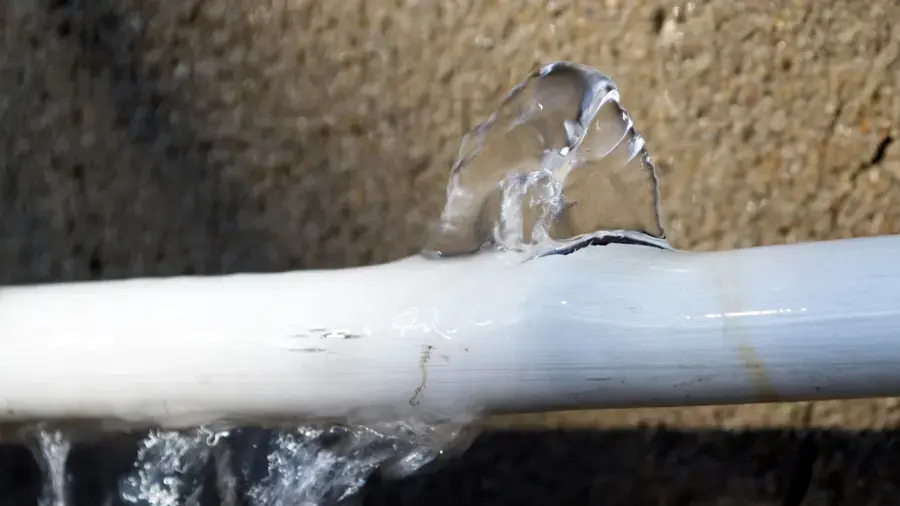
When it leaks
Usually during the thaw
Common spots
Exterior walls, garages, crawl spaces
Drying standard
IICRC S500
Winter drying
Heat plus LGR dehumidifiers
Do this first
First moves when you find a frozen pipe
- Shut off the main Close it before the pipe thaws if you know it froze.
- Open the faucet Let melting ice drain through the fixture.
- Warm it gently Use a hair dryer, never an open flame.
- Watch the wall Look for bubbling paint or a spreading stain.
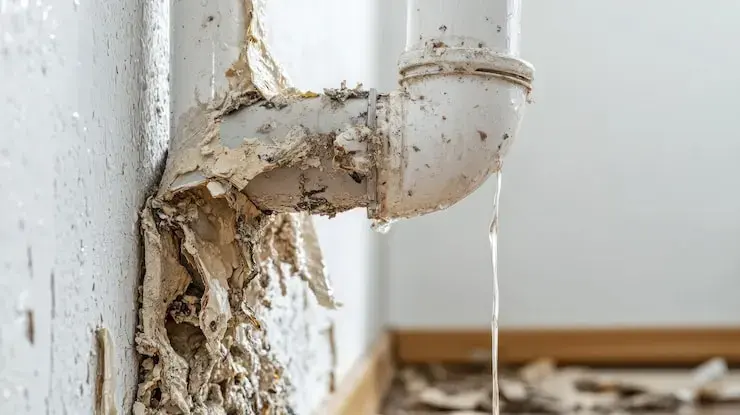
- Call when it leaks A split line in a wall needs the cavity dried.
Typical cost ranges
What does frozen pipe cleanup cost in Rochester, MI?
In Rochester, MI, frozen pipe cleanup typically runs $1,000 to $8,000. The drivers are how long the line ran after it thawed, whether it was in a wall or ceiling, how much insulation got wet and how fast drying started.
Hose bib or garage
$1,000 to $2,500
- Extraction
- Local drying
- Readings
Exterior wall
$2,500 to $5,000
- Wall opened
- Insulation out
- Cavity drying
Ceiling and floor below
$5,000 to $8,000+
- Two levels dried
- Drywall removal
- Heat-assisted drying
Every loss is priced on its own facts. Run the water damage cost calculator for a planning range before the walkthrough.
The work, step by step
How a frozen pipe is handled in Rochester, MI
- 1
Follow the water
The tech who does the walkthrough traces the leak inside the wall with thermal imaging.
- 2
Extract
The extraction crew removes standing water from floors below.
- 3
Open the cold wall
The mitigation team removes wet insulation and drywall so the cavity can dry.
- 4
Dry in winter conditions
The drying team adds heat and LGR dehumidifiers and logs readings daily.
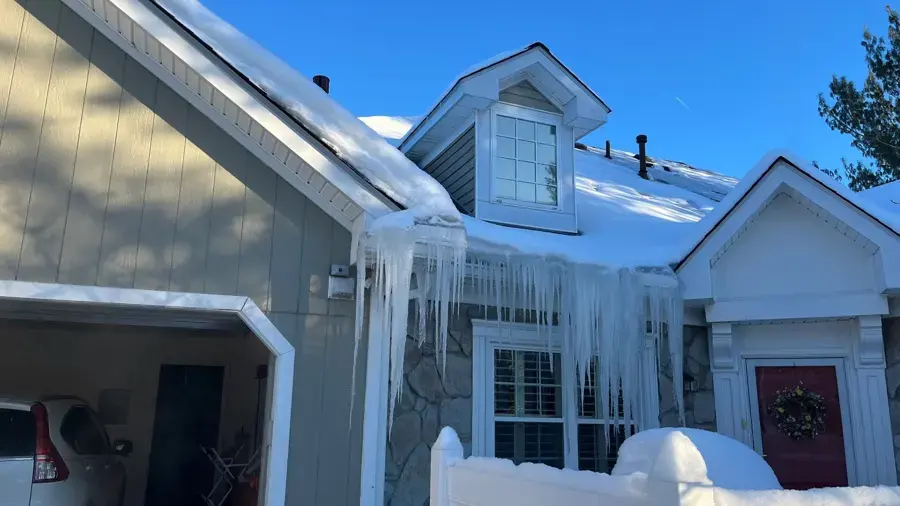
Southeast Michigan winters bring stretches of single-digit nights, and pipes that run through cold spots freeze. Ice expands inside the pipe, pressure builds between the ice and the closed faucet, and the pipe splits. Nothing leaks until the ice melts, which is why a frozen pipe often floods a room the morning the weather warms up.
Where pipes freeze in Rochester homes
- Supply lines in exterior walls, especially kitchen and bath walls on the north side
- Hose bibs and the pipe just inside them
- Lines in attached garages and over unheated crawl spaces
- Pipes near rim joists in older North Hill and downtown basements with little insulation
- Vacant homes and cottages where the heat was turned down too far
How the cleanup works
After the water is shut off, the tech who does the walkthrough uses thermal imaging to follow the water inside the exterior wall and across the ceiling or floor below. The extraction crew removes standing water, and the mitigation team opens the wall where insulation holds water, because wet fiberglass in an exterior wall does not dry on its own.
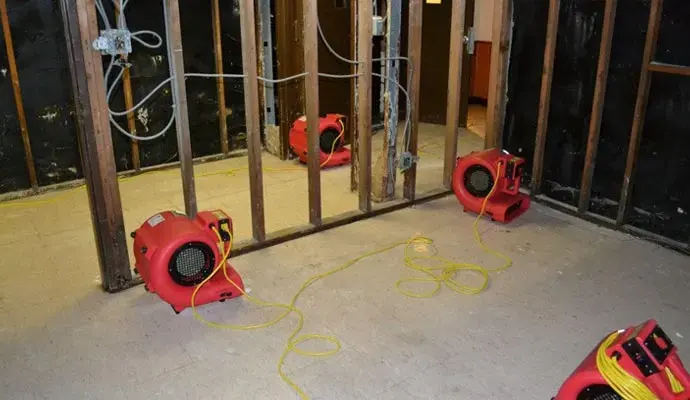
Winter drying takes a different setup. Cold air holds little moisture, so the drying team closes the space, adds heat and runs LGR dehumidifiers to keep the drying conditions right. Readings are logged daily until the framing and subfloor reach the goal.
Trade fact: wet insulation in an exterior wall is almost always removed, because it holds water against the framing and loses its insulating value when it gets soaked.
Preventing the next freeze
Keep the heat at 55 degrees or higher, open cabinet doors on exterior walls, let a faucet drip on the coldest nights and shut off and drain hose bibs in the fall. The National Weather Service cold weather page and the Ready.gov winter weather page cover cold snaps. A pipe that failed without freezing is covered on the burst pipe page.
Service area
Frozen Pipe Cleanup across Rochester and Oakland County
The restoration team covers Rochester and Rochester Hills across ZIP codes 48306, 48307, 48308 and 48309, from downtown Main Street and North Hill to Brooklands, Oakland University and the Oakland Township edge, plus Shelby Township, Auburn Hills, Lake Orion, Troy and Utica.
See every area and ZIP coveredRelated
Related water damage services in Rochester
Questions
Frozen Pipe Cleanup questions in Rochester, MI
1Why did the pipe leak after the cold snap ended?
Ice holds the split closed. When it melts, water flows through the break, so the leak shows up during the thaw.
2How cold does it have to be for pipes to freeze?
Pipes in exterior walls and garages are at risk once outdoor temperatures drop into the teens or lower for several hours, especially with wind.
3Can I thaw a frozen pipe myself?
Gently, with a hair dryer or warm towels, and with the faucet open. Never use an open flame. If the pipe has split, shut off the main first.
4Is frozen pipe damage covered by insurance?
It often is if the home was heated. Damage in a home left without heat may be excluded. Coverage depends on your policy, so it is worth checking with your own insurer.
5Does wet insulation have to come out?
Almost always in an exterior wall. Soaked fiberglass holds water against the framing and does not dry in place.
6How long does drying take in winter?
Usually three to five days for a contained loss, with heat and LGR dehumidifiers keeping drying conditions right.
24/7 emergency dispatch
Frozen Pipe Cleanup in Rochester? Start the dry-out now.
Water that sits keeps spreading into subfloor, drywall and framing. The Rochester restoration crew handles a frozen pipe 24/7 across Rochester and Rochester Hills.