Standing water · Rochester, MI
Water Extraction & Removal in Rochester, MI
Every gallon pulled out as liquid is a gallon that never has to be dried out of the drywall. The extraction crew removes standing water with truck-mounted units, then the drying team takes over.
(888) 612-9219Get emergency water extraction started in Rochester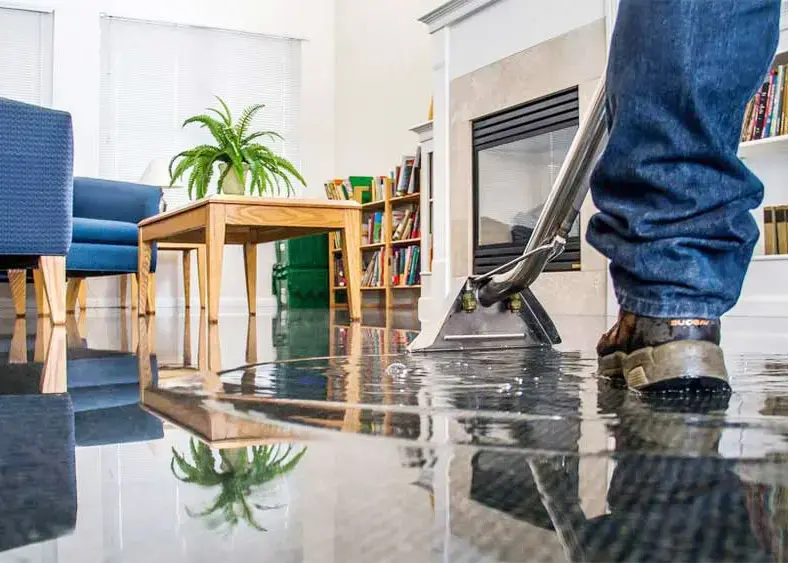
First job
Stop the source, then extract
Main tool
Truck-mounted extractor
Drying standard
IICRC S500
Next phase
Air movers and LGR dehumidifiers
Do this first
First moves when you find water extraction
- Stop the water Close the main shutoff or the valve at the fixture that failed.
- Cut power if safe Turn off breakers to wet rooms only if the panel area is dry.
- Stay off wet carpet Walking on it pushes water deeper into the pad and subfloor.
- Lift what you can Move rugs, boxes and electronics up and out of the water.
- Photograph it Take pictures before anything is moved, then call.
Typical cost ranges
What does water extraction and removal cost in Rochester, MI?
In Rochester, MI, water extraction and removal typically runs $400 to $5,000. The drivers are how much water is standing, how many rooms it reached, whether carpet and pad come out, and the water category.
One room, shallow
$400 to $1,200
- Portable or truck-mount pass
- Carpet pad check
- Moisture readings
Several rooms
$1,200 to $3,000
- Truck-mounted extraction
- Pad removal
- Drying setup starts
Deep water, whole level
$3,000 to $5,000+
- Pumps plus extraction
- Carpet and pad out
- Full structural drying next
Every loss is priced on its own facts. Run the water damage cost calculator for a planning range before the walkthrough.
The work, step by step
How water extraction is handled in Rochester, MI
- 1
Map the moisture
The tech who does the walkthrough meters floors and walls and marks where the water traveled.
- 2
Pull the water
The extraction crew runs truck-mounted and portable extractors until no standing water remains.
- 3
Set the drying
The drying team places air movers and LGR dehumidifiers to match each room's load.
- 4
Read and record
Daily readings go into the drying log until the materials reach the goal.
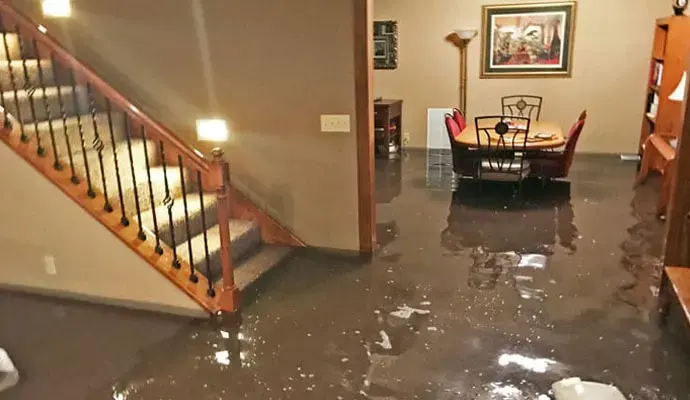
Extraction is the cheapest drying there is. A truck-mounted unit parked in the driveway pulls hundreds of gallons out of carpet, pad and hard floors and sends it outside the house instead of into the next room. In Rochester and Rochester Hills, where most water ends up on a finished lower level, that first pass decides how much drywall and flooring has to come out later.
How the extraction crew removes standing water
The tech who does the walkthrough maps the wet area with a pinless meter and a thermal camera before anything is pulled, so the crew knows where water ran under walls and cabinets. Then the extraction crew works from the deepest water toward the dry edge.
- Truck-mounted extraction for deep water and large carpeted areas
- Portable extractors and submersible pumps for basements the hoses cannot reach
- Weighted extraction tools that squeeze water out of carpet and pad
- Squeegees and wet vacuums on tile, vinyl and sealed concrete
Carpet, pad and hard floors
Clean water on carpet often means the carpet can be saved and the pad cannot. Pad acts like a sponge and is usually pulled and replaced. If the water is Category 2 or 3, as it is with a washer drain, a sump pit or a floor drain backup, carpet and pad are both removed. Laminate and engineered flooring trap water underneath, so the crew checks the subfloor with a meter before deciding what stays.
Trade fact: once water sits for more than a day or two, clean water picks up contamination from the materials it touches, and the category can move from 1 to 2 to 3.
What happens after extraction
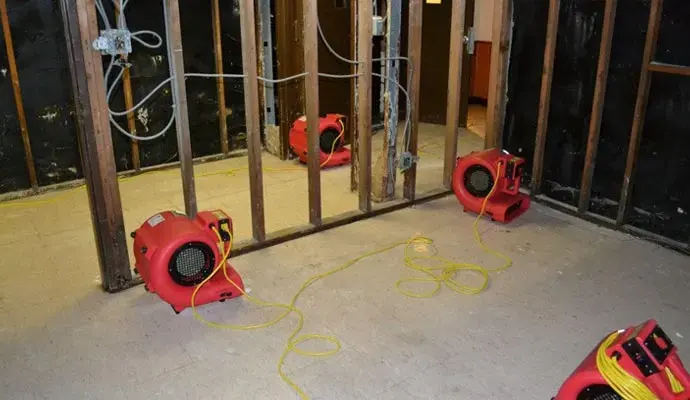
Extraction ends when the wand stops pulling water, not when the floor looks dry. The drying team then sets air movers to the evaporation load of each room and runs LGR dehumidifiers to pull that moisture out of the air. Readings are logged daily until each material sits within 2 to 4 points of a dry reference in an unaffected room. Read more about that phase on the structural drying page.
Safety before anyone steps in
Standing water around outlets, a furnace or a water heater is an electrical risk. Shut power to the wet area at the panel only if the panel itself is dry. The OSHA flood cleanup page and the Ready.gov flood page cover the basic hazards of working around floodwater.
Service area
Water Extraction and Removal across Rochester and Oakland County
The restoration team covers Rochester and Rochester Hills across ZIP codes 48306, 48307, 48308 and 48309, from downtown Main Street and North Hill to Brooklands, Oakland University and the Oakland Township edge, plus Shelby Township, Auburn Hills, Lake Orion, Troy and Utica.
See every area and ZIP coveredRelated
Related water damage services in Rochester
Questions
Water Extraction and Removal questions in Rochester, MI
1How fast should standing water be extracted?
As soon as possible. Water keeps wicking up drywall and into subfloor the longer it sits, and mold can start inside 24 to 48 hours. Extraction first, drying second, is the order that keeps the repair small.
2Can a shop vacuum do the same job?
A shop vacuum removes a few gallons at a time and leaves the pad soaked. Truck-mounted extraction pulls far more water per pass and squeezes the pad, which shortens drying by days.
3Will the carpet have to be thrown out?
Not always. Carpet soaked by clean water is often dried and saved, while the pad is replaced. Carpet touched by Category 2 or 3 water is removed.
4Is the water safe to touch?
Clean supply-line water usually is, but water from a sump pit, floor drain or the rivers is not. Wear boots and gloves and keep children and pets out.
5Does extraction dry the walls?
No. Extraction removes liquid water. The walls, framing and subfloor are dried afterward with air movers and dehumidifiers, and readings confirm when they are dry.
6Does insurance cover water extraction?
Extraction after a sudden, accidental leak is often part of a covered claim, while rising surface water falls under flood coverage. Coverage depends on your policy, so it is worth checking with your own insurer.
24/7 emergency dispatch
Water Extraction and Removal in Rochester? Start the dry-out now.
Water that sits keeps spreading into subfloor, drywall and framing. The Rochester restoration crew handles water extraction 24/7 across Rochester and Rochester Hills.