Category 3 · Rochester, MI
Sewage Backup Cleanup in Rochester, MI
Sewage backup is Category 3 the moment it happens. The mitigation team contains the area, removes what the water touched, treats every surface and dries the structure, with protective gear the whole way.
(888) 612-9219Call for sewage backup cleanup in Rochester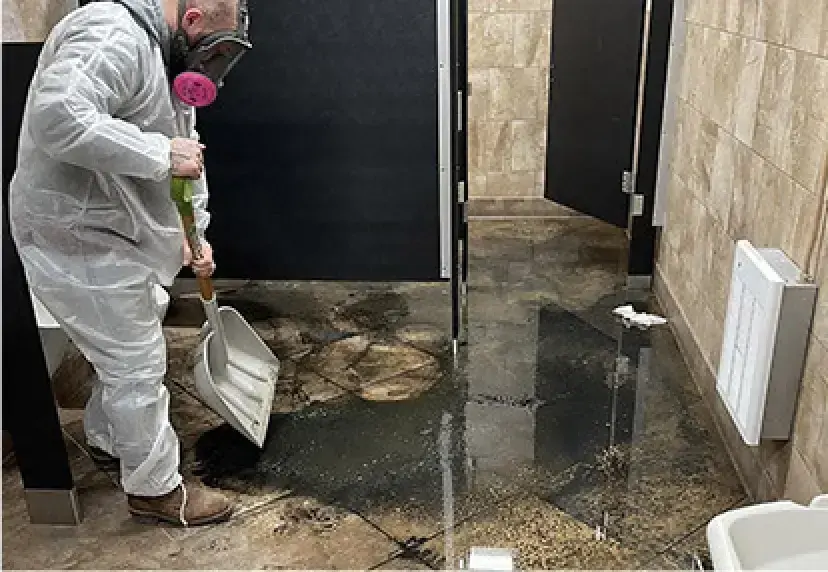
Water category
3, always
Common source
Floor drain in a heavy storm
Protective gear
Respirator, gloves, coveralls
Porous materials
Removed, not dried
Do this first
First moves when you find a sewage backup
- Stop using water No flushing, showers or laundry until the drain is cleared.
- Keep everyone out Children, pets and anyone vulnerable stay away.
- Do not touch it bare-handed Use gloves and boots if you must pass through.
- Turn off the HVAC Keep the air handler from spreading contaminated air.
- Photograph the drain and floor Pictures help the plumber and the claim.
Typical cost ranges
What does sewage backup cleanup cost in Rochester, MI?
In Rochester, MI, sewage backup cleanup typically runs $2,500 to $15,000 or more. The drivers are how far the sewage spread, how much porous material has to be removed, whether the area is finished and how long it sat.
Small drain backup
$2,500 to $5,000
- Containment
- Extraction and removal
- Antimicrobial treatment
Finished basement room
$5,000 to $10,000
- Carpet and drywall out
- HEPA air scrubbing
- Structural drying
Large or long-standing
$10,000 to $15,000+
- Wide removal
- Deep cleaning
- Extended drying
Every loss is priced on its own facts. Run the water damage cost calculator for a planning range before the walkthrough.
The work, step by step
How a sewage backup is handled in Rochester, MI
- 1
Contain the area
The mitigation team sets plastic barriers and HEPA air scrubbers.
- 2
Remove the waste
The extraction crew removes sewage and bags porous materials.
- 3
Clean and treat
Surfaces are scrubbed and treated with an EPA-registered antimicrobial.
- 4
Dry and verify
The drying team dries the structure and logs readings to the goal.
In Rochester and Rochester Hills, most sewage backups come up through the lowest drain in the house, usually the basement floor drain, when heavy rain overloads the sewer or a lateral line clogs with roots or grease. The water is black water from the first minute, and it spreads into carpet, drywall and anything stored on the floor.
Why sewage is handled differently
- It carries bacteria and viruses, so the area is contained before cleanup starts
- Porous materials it touched, such as carpet, pad, drywall, insulation and cardboard, are bagged and removed
- Hard surfaces are cleaned, then treated with an EPA-registered antimicrobial at its labeled dwell time
- HEPA air scrubbers run while the work goes on
How the cleanup works
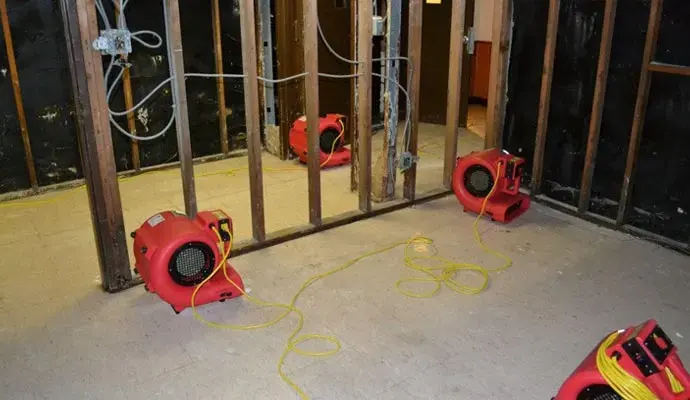
The mitigation team seals the area with plastic containment and sets negative air with HEPA air scrubbers. Technicians in respirators, gloves and coveralls extract the waste, then remove porous materials to at least 12 inches above the highest wet line. Floors, framing and the slab are scrubbed and treated. Once the space is clean, the drying team runs air movers and LGR dehumidifiers and logs readings until the framing reaches the drying goal.
A plumber clears or repairs the line so the backup does not return during drying. Where the cause was storm surcharge, a backflow valve on the floor drain is the usual fix.
Trade fact: sewage backup is Category 3 the moment it happens, and porous materials touched by Category 3 water are removed, not dried, no matter how clean they look afterward.
Keep people out until it is cleaned
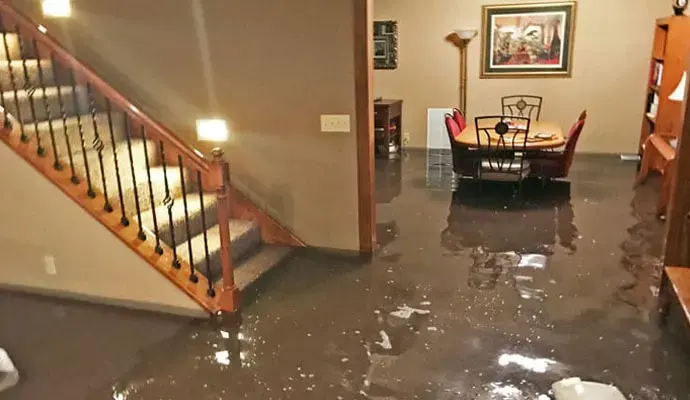
Keep children, pets and anyone with a weak immune system away from the area, and do not run the HVAC if the furnace sits in the wet room. The EPA page on sanitary sewer overflows explains why backups happen in storms, and the OSHA flood cleanup page covers protective gear. Flooded basements from rising water are covered on the basement flooding page.
Service area
Sewage Backup Cleanup across Rochester and Oakland County
The restoration team covers Rochester and Rochester Hills across ZIP codes 48306, 48307, 48308 and 48309, from downtown Main Street and North Hill to Brooklands, Oakland University and the Oakland Township edge, plus Shelby Township, Auburn Hills, Lake Orion, Troy and Utica.
See every area and ZIP coveredRelated
Related water damage services in Rochester
Questions
Sewage Backup Cleanup questions in Rochester, MI
1Can sewage-soaked carpet be cleaned?
No. Carpet and pad touched by sewage are removed and discarded. Only hard, non-porous surfaces are cleaned and kept.
2Why did sewage come up through the floor drain?
The floor drain is the lowest opening in the house. When heavy rain overloads the sewer or the lateral clogs, water backs up there first.
3Is it safe to stay in the house?
Usually, if the area is closed off and the HVAC is off. Keep children, pets and vulnerable people away until cleanup is done.
4Does insurance cover sewage backup?
Many Michigan policies need a sewer or water backup endorsement. Coverage depends on your policy, so it is worth checking with your own insurer.
5What is a backflow valve?
A valve on the floor drain or main line that lets water flow out but closes when the sewer pushes water back in. It is the usual fix for storm backups.
6How long does sewage cleanup take?
Removal and cleaning often take a day or two, and drying usually adds three to five days depending on the materials.
24/7 emergency dispatch
Sewage Backup Cleanup in Rochester? Start the dry-out now.
Water that sits keeps spreading into subfloor, drywall and framing. The Rochester restoration crew handles a sewage backup 24/7 across Rochester and Rochester Hills.