Upper floors · Rochester, MI
Ceiling Leak Water Damage in Rochester, MI
A spreading stain on the ceiling means water is sitting on top of the drywall and in the joists above it. The restoration team finds the source, drains the ceiling safely and dries both floors.
(888) 612-9219Get the ceiling leak traced and dried in Rochester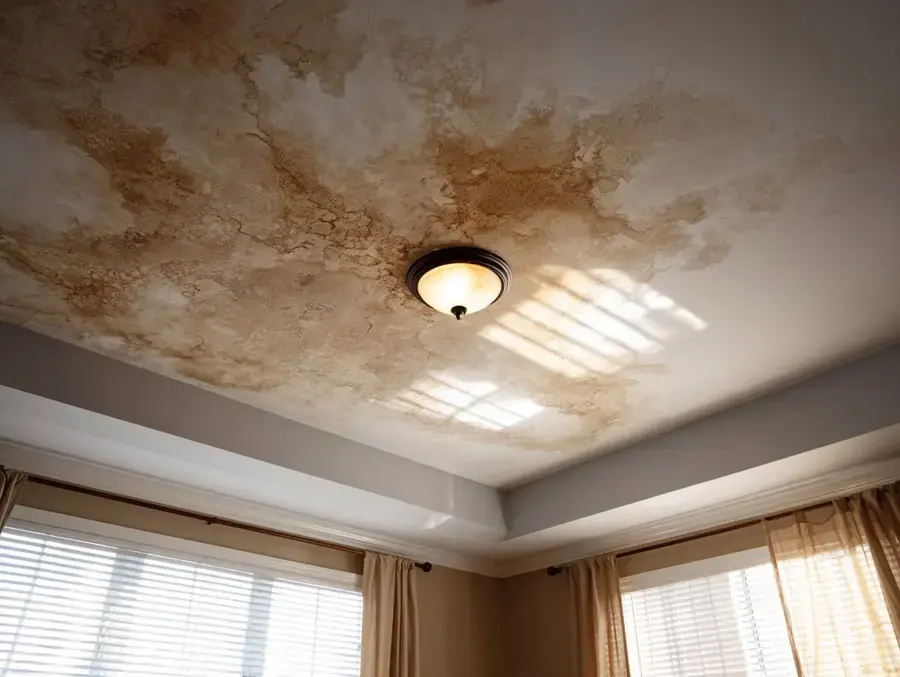
Common sources
Toilets, tubs, showers, laundry
Water category
1 or 2, sometimes 3
Drying standard
IICRC S500
Safety
Stay out from under a sag
Do this first
First moves when you find a ceiling leak
- Stop the fixture Close the valve at the toilet or sink, or the main.
- Cut power to the light Turn off the breaker for a dripping fixture.
- Stay out from under a sag A water-filled ceiling panel can drop without warning.
- Catch the water Bucket and towels under the drip.
- Photograph above and below Show the fixture and the stain.
Typical cost ranges
What does ceiling leak water damage cost in Rochester, MI?
In Rochester, MI, ceiling leak water damage typically runs $800 to $5,000. The drivers are how big the wet area is, whether drywall comes down, the water category and whether the floor above needs drying too.
Small stain, caught early
$800 to $1,800
- Thermal tracing
- Ceiling drying
- Readings
Section of ceiling out
$1,800 to $3,500
- Drywall removal
- Joist bay drying
- Subfloor checks
Two levels, larger area
$3,500 to $5,000+
- Floor and ceiling dried
- Category 2 or 3 removal
- Extended monitoring
Every loss is priced on its own facts. Run the water damage cost calculator for a planning range before the walkthrough.
The work, step by step
How a ceiling leak is handled in Rochester, MI
- 1
Trace the source
The tech who does the walkthrough maps the wet area above and below the stain.
- 2
Drain safely
The extraction crew drains a bulging ceiling and removes standing water.
- 3
Open the joist bay
The mitigation team removes soft drywall so air reaches the framing.
- 4
Dry both floors
The drying team runs equipment above and below and logs readings to the goal.
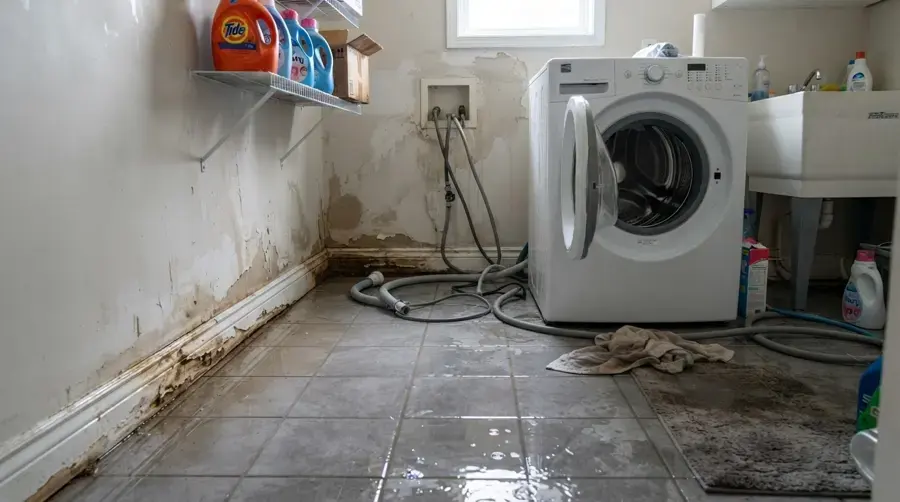
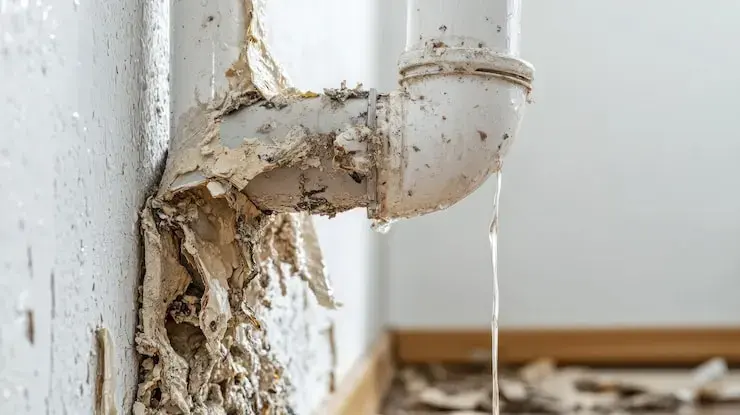
Most ceiling leaks in Rochester homes start inside the house, not at the roof: a wax ring under an upstairs toilet, a failed shower valve, a tub drain, a laundry hose or a supply line in the floor. The water spreads across the top of the ceiling drywall and along the joists, so the stain you see is usually smaller than the wet area above it.
Signs the ceiling is holding water
- A brown ring that grows or darkens
- Paint that bubbles or peels
- Drywall that sags or feels soft
- Drips at a light fixture or smoke detector
- A musty smell in the room below a bathroom
How the cleanup works
The source gets stopped first; a plumber fixes the fixture while the restoration team handles the water. The tech who does the walkthrough uses thermal imaging and a meter to map the wet area across the ceiling and the floor above. If the drywall is bulging, a small drain hole lets the water out into a bucket before the panel fails.
Soft or sagging drywall comes down, which also opens the joist bay for drying. The drying team sets air movers and LGR dehumidifiers on both floors and dries the subfloor under the bathroom. Toilet leaks can be Category 3, so porous materials they soaked are removed rather than dried.
Trade fact: water from a toilet overflow with waste in it is Category 3, while a supply line or clean tank leak is Category 1, so the source decides whether the ceiling drywall is dried or removed.
Staying safe under a wet ceiling
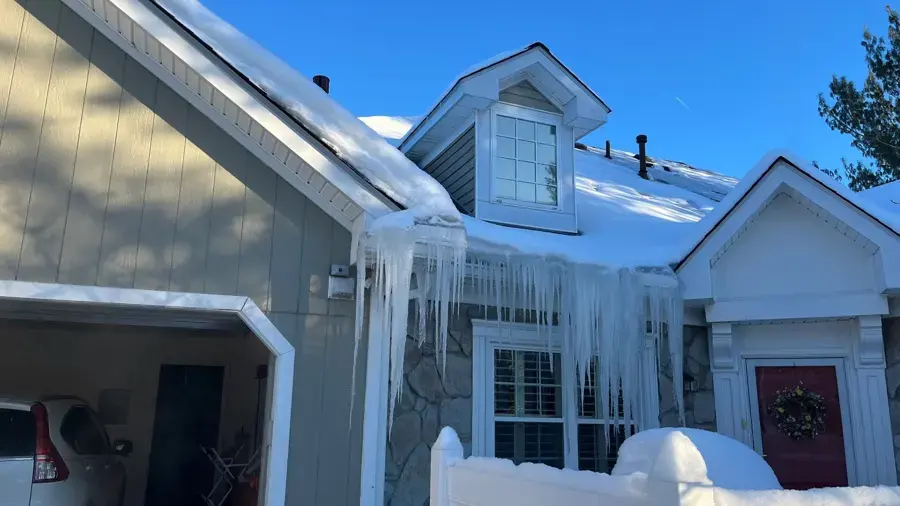
Keep people and pets out from under a sagging ceiling, and turn off power to a light fixture that is dripping. The CPSC home safety page covers electrical and home hazards, and the EPA WaterSense leak page explains how to check fixtures for leaks. A leak from ice at the eaves is covered on the ice dam and roof leak page.
Service area
Ceiling Leak Water Damage across Rochester and Oakland County
The restoration team covers Rochester and Rochester Hills across ZIP codes 48306, 48307, 48308 and 48309, from downtown Main Street and North Hill to Brooklands, Oakland University and the Oakland Township edge, plus Shelby Township, Auburn Hills, Lake Orion, Troy and Utica.
See every area and ZIP coveredRelated
Related water damage services in Rochester
Questions
Ceiling Leak Water Damage questions in Rochester, MI
1Why is the stain smaller than the wet area?
Water spreads across the top of the drywall and along the joists before it shows, so meters usually find a larger wet area than the stain.
2Can the ceiling be dried without cutting it?
Often, if the drywall is firm and the water was clean. Soft, sagging or contaminated drywall is removed.
3Is a ceiling leak covered by insurance?
Sudden leaks from plumbing are often covered, while a slow leak over time may not be. Coverage depends on your policy, so it is worth checking with your own insurer.
4Is it safe to turn on the light?
No. Turn off the breaker to a fixture that is dripping or wet until it is checked.
5Who fixes the toilet or shower?
A plumber repairs the fixture. The restoration team handles the water in the ceiling and floor.
6How long does a ceiling take to dry?
Usually two to four days once the joist bay is open to air. Plaster ceilings in older homes take longer.
24/7 emergency dispatch
Ceiling Leak Water Damage in Rochester? Start the dry-out now.
Water that sits keeps spreading into subfloor, drywall and framing. The Rochester restoration crew handles a ceiling leak 24/7 across Rochester and Rochester Hills.